News
BC lagging in cannabis exports, says report
Published on January 16, 2026 by Pat Bulmer
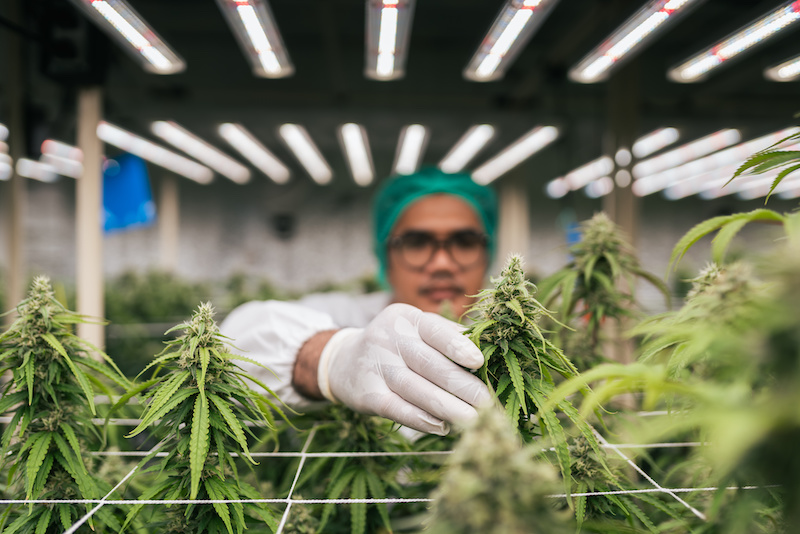 Photo: Adobe Stock/the oz.
British Columbia is a leader in cannabis production but lagging in cannabis exports, a policy paper says.
“British Columbia is a national leader in cannabis production, with over 200 licensed producers responsible for 25% of Canada’s legal output. Yet despite this dominance, the province remains under-leveraged internationally, contributing just 14% of cannabis exports,” the Cannabis Cultivators of British Columbia say in touting their report CCBC Policy Paper 2026: Unlocking the Full Potential of BC Cannabis.
CCBC represents federally licensed cannabis growers from outdoor to greenhouse operators and craft producers.
The paper says exporting rules need to be streamlined.
“The current export permit process administered by Health Canada is no longer suited to the pace and scale of this opportunity,” the paper says. “Each cannabis export shipment requires a separate, pre-approved export permit—a system that has become increasingly slow and inflexible. Cannabis should be treated more like other plant-based exports. Introducing a master export permit model—valid for a defined period (e.g. 12 months) and allowing multiple drawdowns—would align with the seasonal and fluctuating nature of agricultural production.”
Other recommendations:
– A national excise stamp is needed, the group says, instead of separate ones for each province and territory. That’s a decision the federal government could make.
“Industry estimates suggest cannabis producers collectively spend over $100 million annually on excise stamping,” the report says, adding: “transitioning to a single national excise stamp would be entirely revenue-neutral for government.”
How excise taxes are paid should also change, the group says: “Amend the excise duty remittance regime so that taxes are collected at the wholesale distribution level rather than at the point of product transfer. This is how it’s done with alcohol and “would also reduce administrative burden for producers while preserving tax neutrality for government.”
– A cannabis designation should be launched — like BC VQA, used for wines, or “Ontario Grown” used by Ontario Cannabis Stores — to identify home-grown products.
– Expand direct delivery eligibility to all producers. “Products eligible for Direct Delivery should be required to be grown and processed in the province.”
– Fix the farmgate licencing program: “As of 2025, only three non–First Nations farm-gate stores are active in the province. This low participation rate is not due to lack of interest, but rather to a series of systemic barriers that make adoption impractical for most producers. These include a complex and costly application process,” the report says.
– Packaging reform: “Canada’s current regulatory framework generally treats all cannabis products as if they pose the same level of risk, regardless of whether they are psychoactively active in package.”
Child-proof packaging is not needed in all cases. “Health Canada should remove the requirement for child-resistant packaging on non-activated cannabis products, such as sealed dried flower.”
Nor is a 30-gram possession limit required any more: “Canada’s 30-gram public possession limit—originally introduced as a law enforcement tool—has become a barrier in today’s regulated market. Applied even to sealed, excise-stamped cannabis, it limits consumer access, particularly in rural areas where bulk purchases are common and practical. Other regulated industries, such as alcohol, do not impose limits on the amount an adult can purchase or carry.”
– Cannabis farms needs to be classified the same as other agricultural land to receive the same tax benefits and land rights.
– Enforcement against illegal cannabis must increase: “While legal market capture increased significantly in the early years following legalization, national progress has since plateaued in the mid 70% range, underscoring the persistence of a deeply entrenched illicit market,” the report said.
The report concludes: “In 2024, Canada’s legal cannabis sector generated nearly $29 billion in total economic output, contributing $16 billion to national GDP and supporting over 230,000 jobs—figures that rival the economic footprint of dairy and automotive sectors. At the heart of this supply chain are cultivators, who serve as the industrial rootstock of the industry. Production activity alone accounts for approximately 90% of the sector’s GDP contributions, underscoring cultivators’ foundational role.”
Leave a comment on our Facebook page.
© Copyright 2026 Okanagan Z. | About the oz.
Report a Typo or Inaccuracy
We strive to avoid typos and inaccuracies. However, on occasion we make mistakes. We value your contributions and help in correcting them.